
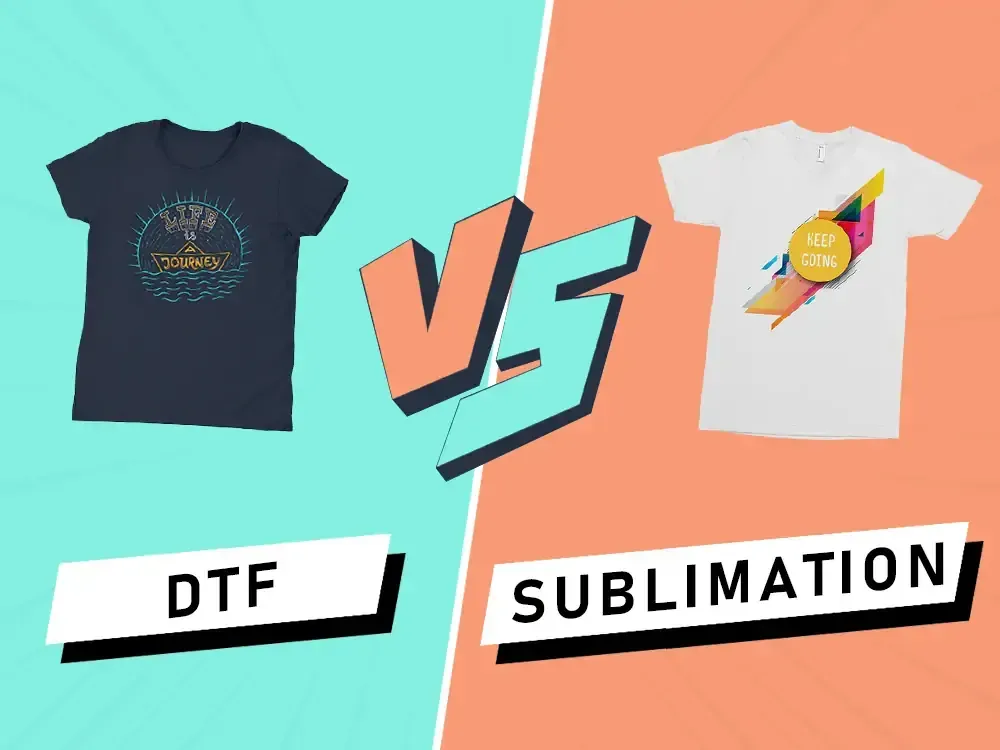
DTF vs Sublimation is a common debate among apparel decorators, DIY printers, and small businesses seeking the best fabric print solutions. Understanding how DTF printing performs on different fabrics helps buyers choose the right option. The choice often hinges on substrate compatibility, texture, durability, and the hand feel. This introductory overview compares performance on cotton blends, pure polyester, and other textiles to set clear expectations for color vibrancy and wash resistance. With careful testing, you can select the approach that maximizes print quality, cost efficiency, and customer satisfaction across fabrics. This overview also emphasizes how audience needs, budget, and production constraints shape the final choice. It is a practical primer for makers weighing options before committing to a printing workflow.
Viewed through an alternative lens, the two approaches resemble a film-based transfer versus a dye-sub embedding technique, each pulling color into fabric in a distinct way. Considering garment composition, print area, and production scale helps shops align the choice with goals like durability and stretch. LSI-friendly concepts such as substrate compatibility, color saturation, and hand feel guide the selection without locking you to a single method. Ultimately, many printers serve customers best by offering a mix of options and clear guidance tailored to fabric type and design priorities.
DTF vs Sublimation: Core Differences and Fabric Compatibility
DTF printing and sublimation printing represent two distinct pathways for transferring designs onto textiles. DTF uses a PET film with high-quality inks, followed by an adhesive powder and heat to apply the design, resulting in a transfer that sticks to a wide range of fabrics. This approach is praised for versatility, softer hand feel, and strong adhesion on many textiles, including cotton and blends. Sublimation, by contrast, relies on heat to embed dye into polymer fibers, delivering bright color, excellent colorfastness, and a smooth hand on suitable fabrics.
When choosing between these methods, consider fabric types for printing and whether you need edge-to-edge saturation or a comfortable feel on a dark garment. DTF tends to perform well across cotton, blends, and some synthetics, while sublimation shines on polyester and polymer-coated substrates. The decision also depends on your budget, production workflow, and the final finish you want—vibrant color on light fabrics or a durable, all-over print on a wider fabric mix.
Cotton-Focused Projects: DTF Printing on Cotton and Blends
For 100% cotton or cotton-rich blends, DTF printing is frequently the better option. It delivers sharp imagery, reliable wash durability, and often requires fewer pretreatments than some sublimation workflows on natural fibers. This makes DTF a practical choice when fabric types for printing include natural fibers such as cotton and cotton blends.
Sublimation on cotton generally requires additional coatings or substrates because pure cotton fibers do not bond well with dye-based transfers. Without a polymer layer, dye molecules struggle to embed, leading to weaker results. When the project centers on cotton, weigh DTF printing against other methods like screen printing to balance durability, texture, and cost.
Polyester and Synthetic Fabrics: When Sublimation Shines
Sublimation printing truly excels on polyester and other synthetic fabrics. The dye becomes part of the fiber, delivering vibrant, uniform color with excellent colorfastness and a soft, almost no-hand-feel finish. This makes sublimation ideal for performance wear, all-over designs, and items where seamless color gradation matters.
DTF remains a viable option on polyester when you need to print odd shapes, textured surfaces, or blends where sublimation’s coating requirements are a constraint. While color saturation on pure polyester can be impressive with sublimation, DTF can offer more flexibility with mixed fabrics and unusual garment geometries, albeit with different color dynamics.
Blends and Specialty Fabrics: Balancing Color, Texture, and Durability
Blends, such as poly-cotton or tri-blends, present a balance challenge. DTF tends to deliver consistent adhesion and color across a wider range of blends, maintaining a solid hand feel and durable wash performance without depending on a polymer-coated substrate.
Sublimation on blends works best when the fabric has enough polymer content to embed the dye, but color saturation and saturation uniformity can drift if the blend includes substantial cotton or lacks polyester. Always test swatches first to verify color drift, edge saturation, and wash durability before committing to a full run.
Practical Guidelines: How to Choose Between DTF Printing and Sublimation by Use Case
Use-case driven decisions help you pick between DTF printing and sublimation. If your goal is vibrant color on polyester fabrics, edge-to-edge prints on light fabrics, or a seamless finish, sublimation is often the strongest choice. For cotton-rich designs or when you need flexible substrate compatibility, DTF printing may be the better option.
Budget, production volume, substrate availability, and color management considerations should guide your plan. DTF can be cost-effective for small-to-medium runs and varied fabrics, while sublimation can deliver high throughput on polyester. Consider a decision guide that weighs your specific project goals against heat transfer methods for fabrics and cost per unit.
Best Practices, Testing, and Common Myths to Avoid
Best practices for success start with surface preparation, pre-treatment, and curing. For DTF, ensure the fabric is clean and oils removed, use appropriate white underbase options on dark fabrics, and follow powder and film instructions for proper curing. For sublimation, pre-coat or choose polymer-coated substrates as needed and monitor color management throughout production.
Quality control and testing are essential. Run a small test print on sample fabric, check adhesion, color vibrancy, edge details, and wash durability. Debunk common myths—sublimation does not work on all fabrics without coatings, and DTF is not inherently fragile. For all projects, keep improving your process with fabric types for printing and ongoing testing across the range of textiles you serve.
Frequently Asked Questions
DTF vs Sublimation: Which method is better for cotton fabrics and why?
DTF printing is often the better choice for cotton fabrics. It prints on 100% cotton and cotton blends with strong adhesion, durable wash performance, and doesn’t require pretreatments like some sublimation setups. Sublimation on plain cotton is challenging unless the fabric is polymer-coated or printed on a specially treated substrate, so for cotton-focused projects DTF tends to be more reliable.
DTF printing vs sublimation printing: Can sublimation work on 100% cotton or cotton blends?
Sublimation on 100% cotton or cotton blends is generally not practical unless the fabric is coated with a polymer layer or used on a polymer-coated substrate. Without sufficient polyester content, dye bonding is weak. For true cotton results, DTF transfers are typically preferred.
DTF vs Sublimation: Which fabric types for printing are best suited for each method (cotton, polyester, blends)?
Sublimation shines on polyester and polymer-coated fabrics, delivering bright colors and a soft hand. DTF is versatile across many fabrics, including 100% cotton, cotton blends, and many synthetics, with reliable adhesion. Nylon and rayon require testing, as sublimation is often impractical.
DTF vs Sublimation: How do color vibrancy and hand feel differ across fabrics like cotton, polyester, and blends?
Sublimation on polyester provides vivid colors and a very soft hand since the dye becomes part of the fibers. DTF gives bold, sharp imagery on a wide range of fabrics and typically results in a slightly warmer hand on thicker textiles, though advances in powders and curing have reduced this gap. Dark fabrics often need a white underbase in DTF.
DTF printing vs sublimation printing: What are the main cost, setup, and production considerations?
DTF requires an inkjet printer configured for DTF, transfer film, adhesive powder, and a heat press; sublimation needs a dye-sublimation printer, heat presses, and polyester-compatible substrates or coatings. Volume affects cost; DTF is often faster for small-to-medium runs and flexible for mixed fabrics, while sublimation excels for high-volume polyester production with consistent color.
DTF vs Sublimation: What practical steps help decide between these heat transfer methods for fabrics when working with mixed fabrics?
Start with test swatches on the actual fabrics, evaluate adhesion and wash durability, and manage color with appropriate underbases for DTF and color management for sublimation. Consider fabric composition, design placement, and budget. If most garments are cotton or blends, choose DTF; if they are polyester-heavy with all-over vibrant color, choose sublimation.
| Aspect | DTF Highlights | Sublimation Highlights |
|---|---|---|
| Core concept | Direct-to-film transfer using PET film with adhesive powder; versatile on many fabrics. | Dye-embedded transfer that bonds with polymer fibers (mostly polyester) for vibrant, seamless color. |
| Cotton and natural fibers | Works well on 100% cotton and cotton blends; strong adhesion and good wash durability. | Less effective on plain cotton; best on polyester or coated substrates. |
| Polyester and synthetics | Good adhesion; versatile on various fabrics; color may vary with base fabric. | Shines on polyester; bright, uniform color; edge-to-edge saturation possible. |
| Blends and mixed fabrics | Consistent performance across blends; less texture-related issues. | Requires sufficient polymer content for best results; performance varies with blend. |
| Other synthetics (nylon/rayon) | Test adhesion; can work with proper formulations and curing. | Sublimation often impractical on 100% nylon/rayon; alternatives recommended. |
| Color vibrancy | Bold images across fabrics; vibrancy depends on base and setup. | Brighter, highly saturated on polyester; excellent colorfastness. |
| Hand feel | Slightly spongier depending on powder/film; newer processes narrow this gap. | Very soft hand feel since ink embeds in fibers. |
| Durability and wash | Durable with proper curing; performs well on many fabrics. | Excellent durability on polyester; resists cracking; not ideal on bare cotton. |
| Cost and production | Need powder, film, and heat; flexible for varied fabrics. | Requires dye-sub printer and polyester substrates; efficient for large runs. |
| Best practices | Pre-treating as needed; white underbase on dark fabrics; careful curing. | Pre-coating/substrates; color management; substrate selection; testing. |
| Myths | Sublimation works on all fabrics with coating; DTF is fragile on all fabrics; both are equally fast for large orders. | Sublimation works best on polyester; DTF is robust across many fabrics; large orders may favor sublimation for poly fabrics. |
Summary
Conclusion (summary): Techniques comparison between DTF and Sublimation shows that each method excels with different fabrics and project goals. Cotton-heavy designs often benefit from DTF for durability and versatility, while polyester-driven items shine with sublimation for vibrant, edge-to-edge color and a soft hand. For blends, testing is essential to balance adhesion, color, and texture. Consider offering both services or developing a decision guide to help customers choose the best method for their fabric type, color goals, and budget. By aligning the method with fabric and design requirements, you can maximize print quality, customer satisfaction, and long-term performance across textiles.